

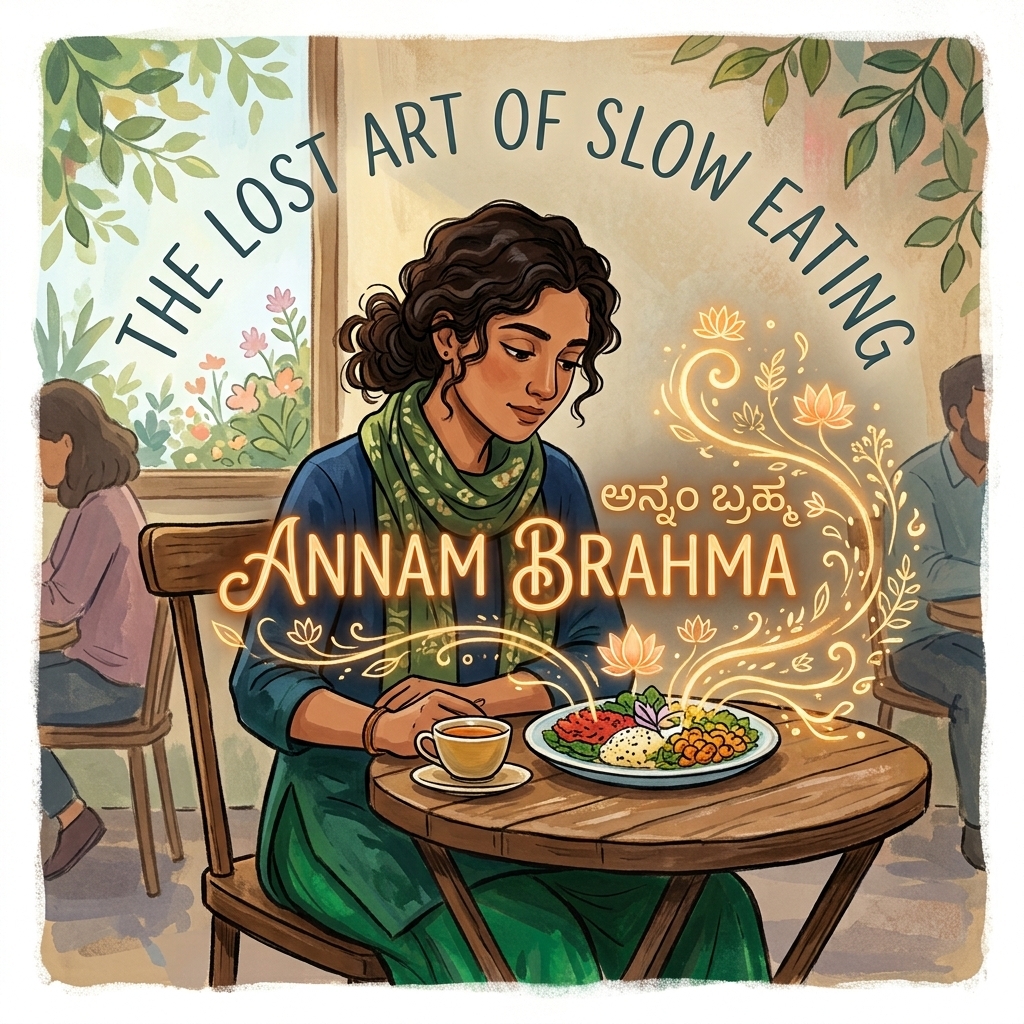
The Lost Art of Slow Eating: Annam Brahma
I have a strange relationship with food.
When I am busy or on the go, I don’t really eat. I just grab quick bites to stop the hunger pangs. But when it comes to an actual full meal, I am fiercely protective of my peace. I cannot eat in a rush, at a busy office desk, or amidst chaos. My first choice is always the quiet comfort of my home. If not home, it has to be a place where I can sit down peacefully a quiet restaurant, a calm cafe, or anywhere my mind can actually settle.
Yet, even when I find that quiet space, I’ve noticed a deeper disconnect. So many of us sit peacefully, yet we treat the food itself like mere fuel.
It made me think about an ancient Indian truth that crosses cultural and religious boundaries: Annam Brahma – Food is Divine.
Why Is Grain Treated Like a God?
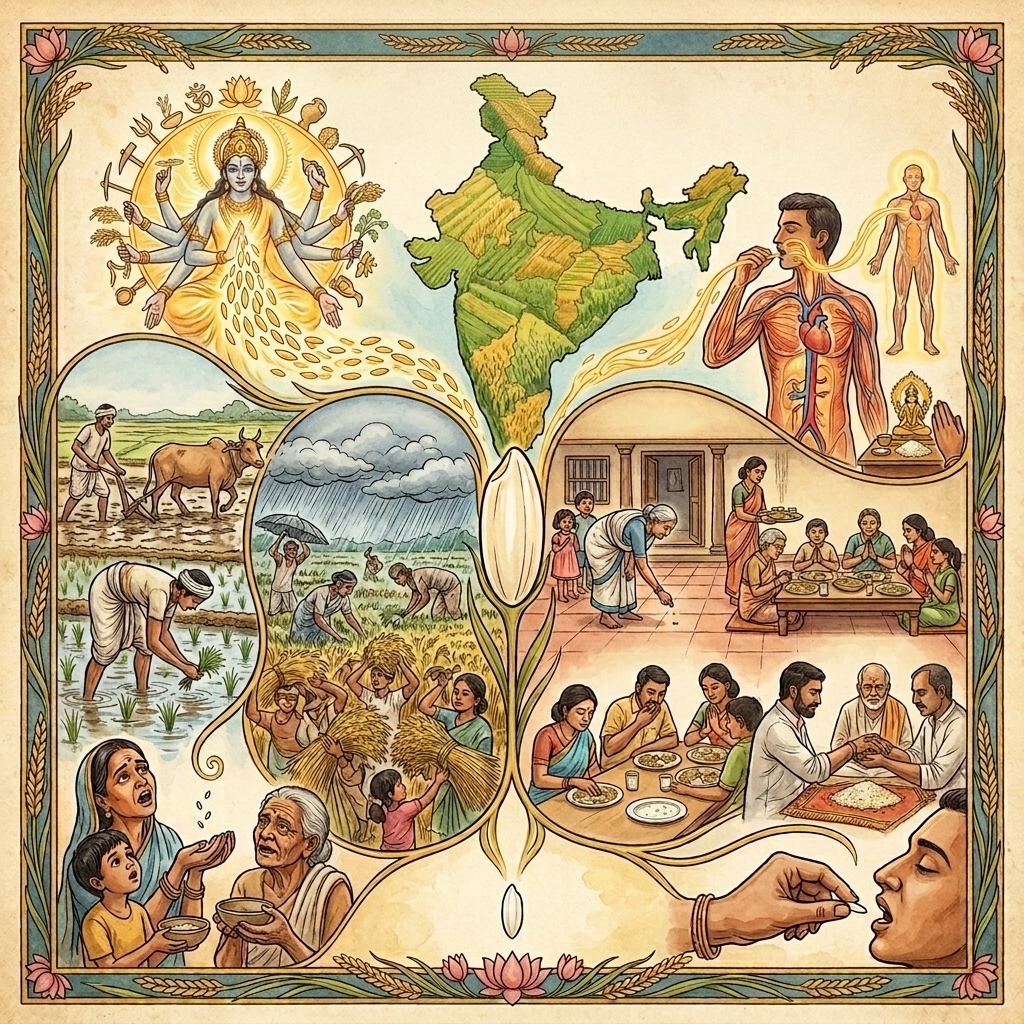
To understand Indian culture, you have to understand its relationship with food specifically rice and grains. In India, food isn’t just something you buy at a store; historically and culturally, a grain of rice represents life itself.
Before modern supply chains, a harvest was the fragile boundary between life and starvation. A single grain of rice required months of soil work, monsoon rains, intense physical labor, and community effort. To waste it or disrespect it was to disrespect life itself.
That is why, across Indian history:
- Rice is never stepped on. If a grain falls on the floor, people instinctively pick it up with respect.
- Meals are offered in gratitude before being eaten whether through a silent moment of grace or an offering.
- Rice is a symbol of blessing used in weddings, housewarmings, and sacred ceremonies across every region of India.
Calling food Brahma (the ultimate creator or divine source) wasn’t just poetry. It was a reminder that the food on your plate literally becomes your blood, your energy, and your thought tomorrow. You are worshipping the very thing keeping you alive.
The Sacred Floor and the Modern Table
There is a reason our elders were so insistent on how we sit when we eat.
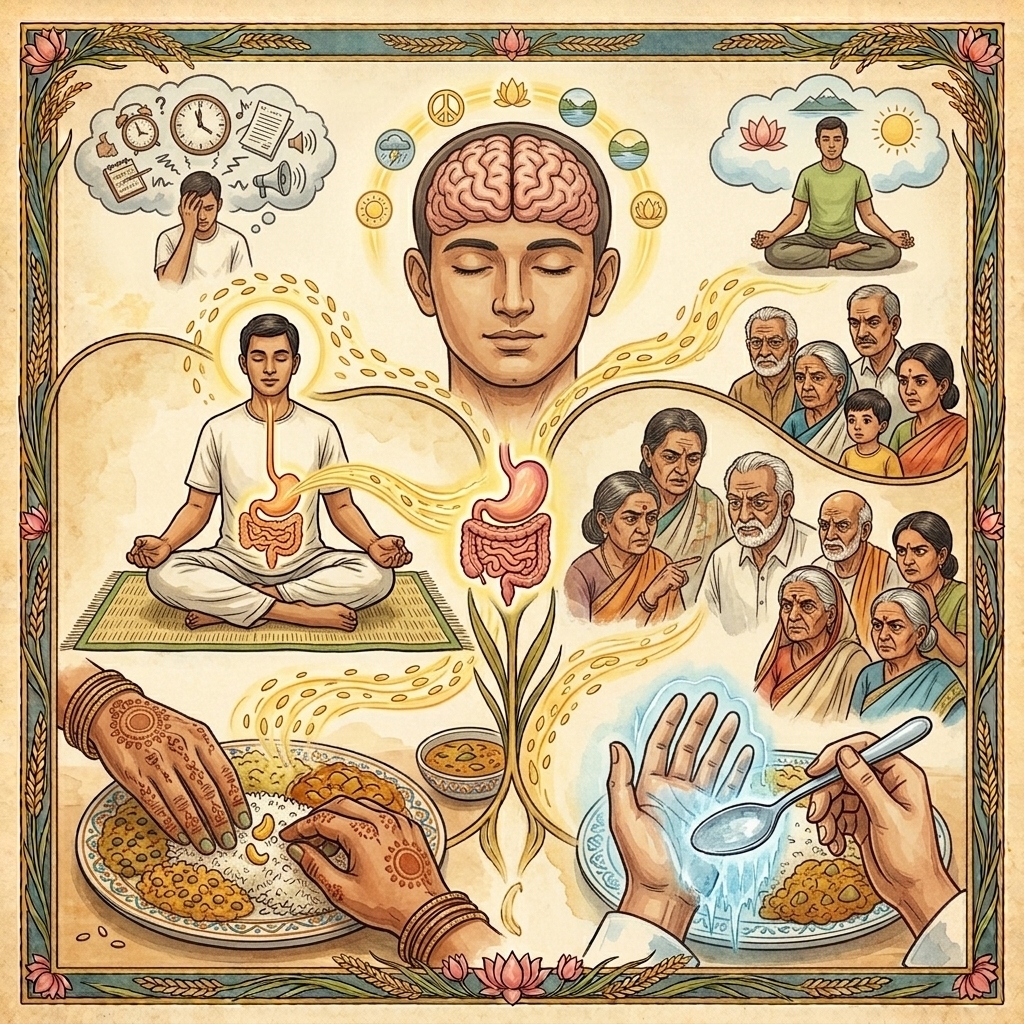
Traditionally, eating meant sitting cross-legged on the floor (Sukhasana). It wasn’t because people lacked chairs; it was intentional. Sitting on the floor automatically forces your body to slow down. It triggers the brain to enter a calm, resting state, improving digestion before you even take the first bite.
Even as modern homes traded floor mats for dining tables, the core intention remained: Eating requires a physical anchor. You sit down so your mind stops wandering. The act of sitting signals to your body that the rush of the world is paused for the next twenty minutes.
Why the Older Generation Hated Spoons
If you grew up around traditional Indian elders, you might have noticed the subtle glare or “angry eyes” whenever someone reached for a fork or a spoon to eat a traditional meal.
It wasn’t just old-fashioned rigidity. To the older generation, inserting cold metal between your hand and your food broke a vital connection.
Eating with your hands is an immersive, sensory experience:
- Temperature & Texture: Your fingertips touch the food first, warning your mind of the temperature and preparing your mouth for the texture.
- Mindful Connection: You cannot easily scroll on a phone or type on a keyboard with curry on your hands. Eating with your hands forces you to be 100% present with your plate.
- Reverence: Touching your food directly shows a level of intimacy and respect for what is about to sustain you.
To the older generation, using a spoon felt clinical, cold, and detached like putting a barrier between yourself and the divine gift of Annam.
Reclaiming the Soul of the Plate
Even without following traditional rituals, understanding Annam Brahma shifts something inside.
When I sit down at my home dining table or in a quiet restaurant corner today, I realize that true peace isn’t just about finding a quiet room—it’s about honoring what is on the plate. In a fast world that treats everything as disposable, taking the time to sit, touch, taste, and respect our food might be one of the quietest, most meaningful acts of peace we have left.
Leave feedback about this